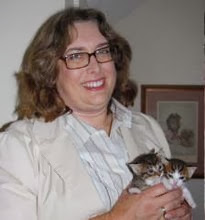
Large-scale, commercial breeders are common in Minnesota and unregulated.
Photo by CAPS
His most recent USDA inspection report reads like something out of a horror movie. “The building known as ‘Kyles building’ had a strong ammonia level during inspection. The inspectors eye were burning from the levels present…”
The report also cites violations for lack of veterinary care, inadequate indoor housing facilities, inadequate primary enclosures, grouping of incompatible animals, issues with the housing facilities in general and other problems.
In one report a Chihuahua suffered from untreated injuries so severe that she could not close her mouth.
In spite of the gross violations reported in his USDA inspection reports, Paul Haag, operator of Valley View Kennel, and member of the Minnesota Farm Bureau, lobbied, with support from the Farm Bureau, to kill Senate File 7 and House File 253, a. k. a. “the puppy mill bill”, adding support to the growing idea that special interests have taken over the Minnesota Legislature.
Haag was not alone in lobbying against the puppy mill bill. His compatriots included other puppy mills, Minnesota pork producers and the NRA. They worked together with members of the Senate Agriculture and Veterans Committee to shoot down the proposed legislation that would require inspections of commercial dog breeders.
Senate File 7 and House File 253 are relatively simple propositions. If passed into law, they would provide the state authority to inspect large-scale, commercial dog and cat breeding operations in order to verify compliance with current state animal cruelty laws. The inspections would be based on an existing inspection process the State already requires of nonprofit animal shelters.
The program would be paid for through licensing fees required of the commercial breeders, which, according to a fiscal note prepared by the Board of Animal Health, would amount to about $1 to $2 for each puppy these breeders sold. Furthermore, according the Minnesota Department of Revenue, the bill would help the State collect about $1.3 million dollars in sales tax that are currently going uncollected. A review of commercial breeders by the Department of Revenue found that the majority of them were not in compliance with Minnesota Sales Tax laws.
Minnesota is one of the top 10 states in the nation for puppy mills, in part because the Legislature has refused to regulate the industry.
“Minnesota is a safe haven for large-scale, abusive breeders,” said Marlene Foote, president and founder of Animal Ark, Minnesota’s largest no kill animal welfare organization. “In Minnesota, even a breeder convicted of animal abuse and torture can continue operating a puppy mill.”
Kathy Bauck, according to animal welfare advocates like Foote, is one such example.
Repeatedly charged and convicted of multiple counts of animal cruelty, animal torture and practicing veterinary medicine without a license the USDA finally filed a motion in 2009 to have Bauck’s federal breeding license revoked. In Minnesota, however, in spite of her criminal convictions, Bauck is still allowed by the State of Minnesota to continue breeding and selling dogs. No license is required.
For these and other reasons, Senate File 7 and House File 253 have received strong support from a growing number of small, responsible breeders, many of which believe the failure to regulate the breeding industry is unnecessarily giving all breeders a bad reputation. Representatives from the Minnesota Purebred Dog Breeders Association testified before both the House and Senate Ag Committees in support of the bills.
In spite of these facts, the special interests appear to be getting their way. During a Senate Ag Committee meeting held March 9, 2009, Senate File 7 was voted down by a 5 – 7 vote, with two members absent and one abstaining.
“The irony here is that nonprofit animal shelters are open to the public, and, therefore, operate in a relatively transparent way,” said Foote. “Yet the State of Minnesota and we believe that inspecting and licensing animal shelters is a good idea.”
“Puppy mills generally operate in secret, behind locked gates and fences where no one can really see what is going on. And, in spite of the growing evidence that there are a lot of corrupt commercial breeders, breaking a variety of laws, the Senate Agriculture Committee has decided once again to bow to the special interests and give commercial breeders a free pass.”
Yesterday (Tuesday, March 9), the MN Puppy and Kitten Mill Bill (Senate File 7) was heard in the Senate Agriculture Committee; however, it did not pass.
As you know, S.F. 7 and H.F. 253 were laid on the table ("put on hold") in their respective Agriculture Committees during the 2009 session. In order to move each bill along, we needed a majority vote in each Agriculture Committee to take the bill off the table and continue discussions.
We also needed to meet committee deadlines. (The first policy committee deadline in the Minnesota Legislature is this Friday, March 12. Bills must pass through all policy committees in either the House or Senate by this date.)
Because S.F. 7 did not pass the Senate Agriculture Committee, the committee deadlines cannot be met.
Time was running out
The lobbying team has worked hard meeting and talking with Agriculture Committee members in both the House and Senate trying to get hearings and secure the votes. Thousands of constituents (you) from all over Minnesota have also been calling, emailing and writing legislators and signing petitions of support.
The Chair of the House Agriculture Committee (Rep. Otremba) would not grant H.F. 253 a hearing until there was movement in the Senate. But the Chair of the Senate Agriculture Committee (Senator Vickerman) would not grant S.F. 7 a hearing.
So the lobbying team took different action, bypassing the normal way a bill is scheduled and given a hearing.
Senator Sharon Erickson Ropes, who sits on the Senate Agriculture Committee and was supportive of the bill, was approached and she agreed to make a motion yesterday (March 9) to move S.F. 7 off the table for a hearing. This motion passed, which then allowed the bill to be debated in Committee.
As the Committee Chair would not grant the bill a hearing, this motion allowed the bill to be heard.
The hearing
Senator Don Betzold, the author of S.F. 7, gave an overview of the bill. He did an excellent job, as too did Keith Streff (humane agent for the Animal Humane Society) who responded to questions from Committee members. The Chair did not allow for any public testimony.
One legislator was very supportive and expressed his reasons. Another legislator was in strong opposition and insisted "the system works as is." One legislator committed to voting yes prior to the meeting but then changed her vote. The Chair was not supportive.
When there were no more questions on the bill, a motion was made to vote yes or no on the bill. The Committee vote was 7 to 5 - opposed. The bill failed.
Following the vote, two legislators (who voted yes) expressed a clear desire that something needs to be done.
NOTE: For video coverage of the meeting, go to: Senate Agriculture Committee (Senate File 7 is the last item discussed.)
Senate Agriculture Committee
There are 15 members on the Senate Agriculture Committee. Below are the member names (with emails and phone numbers) and how each voted.
Senator Jim Vickerman (Chair, District 22) 651-296-5650 - NO
Senator Sharon Erickson Ropes (Vice Chair, District 31) 651-296-5649 - YES
Senator Steve Dille (Ranking Minority Member, District 18) 651-296-4131 - NO
Senator Lisa A. Fobbe (District 16) 651-296-8075 - NO
Senator Joe Gimse (District 13) 651-296-3826 - NO
Senator David W. Hann (District 42) 651-296-1749 - PASS (didn't vote)
Senator Bill E. Ingebrigtsen (District 11) 651-297-8063 - NO
Senator Paul E. Koering (District 12) 651-296-4875 - NOT PRESENT
Senator Gary W. Kubly (District 20) 651-296-5094 - YES
Senator Keith Langseth (District 9) 651-296-3205 - YES
Senator Tony Lourey (District 8) 651-296-0293 - YES
Senator Steve Murphy (District 28) 651-296-4264 - YES
Senator Rod Skoe (District 2) 651-296-4196 - NOT PRESENT
Senator Dan Skogen (District 10) 651-296-5655 - NO
Senator Satveer S. Chaudhary (District 50) 651-296-4334 - NO
Every legislator who sits on the Senate Agriculture Committee was lobbied - multiple times. Each member was (and is) fully aware of the details of the bill and has seen or heard about animal cruelty, consumer fraud, tax evasion, and other issues defining the problem.
As for the opposition, lobbyists for agricultural interests and for the larger breeders also showed up at the committee meeting, as did the NRA lobbyists. They worked hard lobbying committee members. Some small breeders, too, many of whom were apparently ignorant of the details of the bill, worked hard against it.
We will offer further details and explanations about the vote in the coming weeks through emails and posts on the Animal Folks MN website.
TELL THEM WHAT YOU THINK
It's time to hold legislators accountable for their votes: • For legislators who voted yes, please contact them and say thank you. They gave us support; we need to show them ours.
• For legislators who voted no, consider contacting them and voicing your disappointment (nicely, please) about their choice to vote no.
• Most importantly, please remember how these members voted when you vote during the next election. (Senator Vickerman, Senator Dille and Senator Murphy have announced they will not be running for re-election in 2010.)
YOUR VOICE WAS HEARD
Please know how incredibly important your efforts have been, and please don't stop. We won't.
The Minnesota Legislature, not just the Agriculture Committee, heard us. They know about the problem of inhumane dog and cat breeding and the need for regulation.
Petitions, emails, letters and calls in support of S.F. 7/ H.F. 253 have been submitted to Minnesota legislators by thousands of people throughout Minnesota.
The 10,000 goal for petitions was met. The response after our last email was overwhelming; the response at the Pet Expo was also extraordinary. With the help of Stop The Suffering, the Minnesota Humane Society, Minnesota Voters for Animal Protection and individual citizens from all over the State, over 10,000 names of supporters were collected and submitted to legislators, representing every House and Senate district.
This list is still valuable and useful. It gives us all a strong database and voice to use for future efforts. We will continue to build a well-informed, well-connected advocacy network that represents all areas of Minnesota. Please still continue to direct people to Animal Folks MN to learn more and build support.
THANK YOU to everyone for your commitment and hard work. You are all amazing.
PLEASE CONTINUE TO HELP. This is the beginning of a movement, not the end. In the coming weeks and months, we'll notify you (through emails and on the Animal Folks MN website) about what you can do to help change the "system" for animal protection in Minnesota and help change attitudes about how animals are viewed and treated.
3 Navy dogs died after being neglected by contractors training them to detect explosives By ANNE FLAHERTY , Associated Press
Last update: March 9, 2010 - 3:14 PM
WASHINGTON - The Navy says that three dogs died and dozens more were in poor health after being neglected by a private security contractor in Chicago that had been hired to train the dogs to detect explosives.
A team of military handlers discovered the dogs last October at a facility run by Securitas Security Services USA after the Navy terminated a $7.5 million contract.
Navy spokesman Capt. William Fenick said that of the 49 dogs discovered, two were dead and the rest were in poor health. Another dog died soon after being recovered.
Securitas Security Services did not immediately provide comment.
The incident was first reported by The Virginian-Pilot, which says it obtained a picture of one of the rescued dogs, whose rib cage and hip bones were protruding.
The discovery is the latest in a string of contracting woes for the Defense Department. Lawmakers and government watchdog groups say they are concerned that the military is relying too heavily on outside vendors to do many of the jobs that should be handled internally.
In December 2008, the Navy signed a $350 million contract with Lockheed Martin Corp. to help guard its installations. The five-year contract included $7.5 million for 49 highly specialized K-9 units to sniff out explosives. To meet the K-9 requirement, Lockheed in turn hired Securitas Security Services, headquartered in Parsippany, N.J.
But after the dogs failed to demonstrate they could perform as promised, the Navy canceled the contract in July, Fenick said. The team of handlers were sent three months later to pick up the dogs from the Securitas' dog-training facility near Chicago.
Fenick declined to say how much the Navy had already paid Lockheed under the agreement, saying that the contract details are under review.
The state of Illinois is conducting a separate investigation into the allegations.
Fenick said that of the 46 dogs that survived, eight were adopted privately and the rest were deployed at various Navy installations after having completed training.
Governor signs puppy mill bill as first dog looks on by O. Kay Henderson on March 9, 2010
Governor Culver signs puppy mill bill as Buck watches.
Governor Chet Culver has signed a bill into law that immediately allows for state inspections of commercial dog kennels that draw public complaints.
Breeders who are raising four or more dogs would have to pay a new licensing fee and register with the state. Culver calls that a “seal of approval” which reputable breeders can present to families hoping to adopt a pet.
“Providing assurance to families that the pets they adopt are healthy, clean and have been raised humanely,” Culver said. According to Culver, the “overwhelming majority” of dog breeders, pet stores and animal shelters have “absolutely nothing to fear” from this legislation.
“But to any facility currently operating as a puppy mill or to those who raise companion animals in unhygienic and inhumane settings, now is the time for you to change course or pay the consequences,” Culver said.
Culver’s wife, Mari and his two children brought the family’s dog, Buck, to the bill signing. The family got Buck from the Animal Rescue League of Iowa, which hosted today’s bill signing event. As the governor sat at a table to formally sign the so-called “puppy mill” bill into law, Buck put his paws up on the table and someone in the crowd suggested that the dog put his paw print on the bill alongside the governor’s handwritten signature.
Tom Colvin, executive director of the Animal Rescue League and president of the Iowa Federation of Humane Societies, called today’s bill signing a “fantastic” event for two-legged and four-legged Iowans. “What this bill is basically allowing us to do is to have Iowans employed by Iowa through the Iowa Department of Agriculture, upon complaint, get into the facilities of USDA federally-licensed facilities and ensure that they are not suffering because of inadequate food, water, shelter, veterinary care or grooming,” Colvin said.
Mary LaHay of Iowa Voters for Companion Animals called today’s bill signing ground-breaking. “A fabulous, fabulous thing to see happen to help these many, many dogs that are suffering so seriously,” LaHay said. Critics of the bill had argued the legislation would lead to efforts that restrict hunting and impose new requirements on agricultural operations.
Reposted from the Pet Haven blog and Animal Humane Society Website:
Friday, March 5, 2010
The Dog and Cat Breeder Bill (S.F. 7/H.F. 253), also known as the Puppy and Kitten Mill Bill is before the Minnesota Legislature. The bill will put in place licensing and inspection of dog and cat breeder facilities in Minnesota, bringing an end to inhumane breeding practices.
Currently, the bill is still “on the table” in the respective agriculture and veterans committees in both the Minnesota Senate and the House of Representatives. We need your continued support to help members of the committees understand the importance of the bill and to “call it off the table” for discussion.
Time is critical. The first policy committee deadline is next Friday, March 12. If we are not granted a hearing by that time, the bill will not pass this year.
You can make a difference with one phone call. Please call all of the following members on the committees (listed below) before noon on Monday and let him or her know you support S.F. 7/H.F. 253. If you live in one of these districts, please make certain your legislator knows that fact. To find your district and State legislators, go to: Minnesota District Finder.
MN Senate Agriculture and Veterans Committee Members State the bill number and the Senate author's name: S.F. 7 authored by Senator Don Betzold
Tony Lourey 651.296.0293 Lisa A. Fobbe 651.296.8075 David W. Hann 651.296.1749 Rod Skoe 651.296.4196 Dan Skogen 651.296.5655 House Agriculture, Rural Economies and Veterans Affairs Committee State the bill number and the House author’s name: H.F. 253 authored by Representative Tom Tillberry
Mary Ellen Otremba 651.296.3201 Kent Eken 651.296.9918 Terry Morrow 651.296-8634 Dean Urdahl 651.296.4344 Now is the time to be a voice for animals.
Explain the importance of the bill and that it is a highly collaborative effort among many animal groups and volunteers, and the bill has a long list of supporting organizations and individuals—including you.
Talking points for your call
Educate them on what goes on in puppy and kitten mills
If you call this weekend, chances are you'll reach the legislator's voicemail. Please leave a message with your name and support of S.F. 7 (Betzold) or H.F. 253 (Tillberry).
Legislators are also hearing from breeders and others who oppose the bill. Your voice will make a difference. Don’t wait—call today!
The Wildcat Sanctuary and two Bengal tigers that reside there will be featured in an upcoming episode of Animal Planet. The tigers, Titan and Lily, were taken from the property of Cynthia Gamble, who was killed four years ago by a third tiger, Tango.
Animal Planet miniseries showcases the deadly risks of keeping exotic pets.
By KEVIN GILES, Star Tribune
Last update: March 5, 2010 - 9:25 PM
Titan and Lilly live behind two tall fences off a gravel road in the woods of Pine County, forgotten for the news they made four years ago.
Soon they'll appear on national television -- on Animal Planet on March 21 -- as symbols of what can go wrong with private ownership of wild animals.
A tiger named Tango killed his owner, Cynthia Gamble, at her Pine County farm in April 2006. Titan and Lilly, who were kept there in separate enclosures, took no part in the attack. But they hit the headlines as icons of tragedy, portrayed as starving and emaciated.
The miniseries examines why people risk their lives to own so-called "exotic" pets that can turn on them in an instant. The three-part airing will show venomous reptiles first, deadly big cats second and chimpanzees third.
"Why are people attracted to something so dangerous?" asked Tammy Thies, director of the Wildcat Sanctuary, the tigers' new home. "We all see the majesty in a wild animal and I think some people take that too far in a personal relationship thinking they're going to get something out of it."
The sanctuary is a private refuge where a black leopard, a jaguar, tigers, lions, cougars, bobcats, lynx and servals live out their years. All of the cats had private owners once. Many of them had become threats to public safety before they arrived at the sanctuary, which is funded with private donations.
A film team came to the Wildcat Sanctuary to document Titan and Lilly in their new habitat. Titan weighs 515 pounds and Lilly, less than 300. Both tigers, at 14, could live many more years.
The sanctuary, which was built in Pine County about the time that Gamble was attacked, now has 115 animals. Employees take great care to prevent escapes and guard against attacks, Thies said.
Animal Planet wanted to do "reenactments," Thies said, including having her pet Titan and Lilly. "I said we don't go in with the tigers," she said. They are powerful enough that a single swat could kill a human being.
"They said it was the first happy filming they did because they had seen all the places that people died."
Animal Planet promotes the miniseries as a window into the kinship people feel with dangerous animals that sometimes kill and maim their owners.
Both of the people featured in the reptile episode are dead -- a man presumed eaten alive by one of his many monitor lizards, and a woman who didn't survive her pet viper's bite.
"Exotic pet ownership is not as rare as one might think, or as wildlife experts would wish," Animal Planet said in promotional literature. "Millions of exotic animals are brought to the United States in any given year. A significant number of these pets have the potential to severely injure or kill their owners, neighbors or family."
Thies said her sanctuary has seen less business lately -- a good development, she said -- because a new law in Minnesota requires registration of exotic animals and has discouraged ownership somewhat.
"The bad news is that we're still allowing people from other states to come here and exhibit their animals," Thies said, warning parents they should guard their children around exotic animals at malls, fairs and other places where they're displayed.
Kevin Giles • 612-673-4432
THE WILDCAT SANCTUARY The private refuge, which depends on donations to operate, has launched its largest-ever fundraising campaign, seeking to raise at least $50,000 by April 30. A foundation has pledged to match that amount, said Tammy Thies, the sanctuary's director. Additional information is available at: www.wildcatsanctuary.org/Programs/match.html
WHEN TO WATCH March 14: Venomous reptiles
March 21: Big cats
March 28: Chimpanzees
All shows air at 9 p.m.
For further information, go to animal.discovery.com
 Photo by CAPS