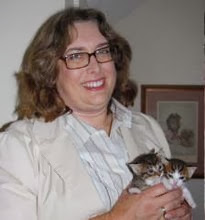
Jim Williams from Animal Allies Humane Society was a guest on Animal Wise Radio yesterday. He shared the inspiring story of how the city of Duluth, Minnesota is rapidly becoming one of the safest communities in the nation for homeless pets.
In 2009 the live-release rate for the city was a whopping 88%! During the interview, Jim said, "It was surprisingly easy. It was hard work. We are all a little grayer. But it was surprisingly easy." Learn more and listen to the interview at http://www.animalwiseradio.com.
Shortly after that, Nathan Winograd cited the outstanding success of Duluth in an article he wrote for the Examiner. You can read that article here:
http://www.examiner.com/x-16635-SF-Animal-Shelters-Examiner~y2010m3d28-Nokill-day-a-celebration-of-compassion
Animal Ark and Animal Wise Radio would like to officially send a big, virtual high-five to everyone in Duluth who helped to make this outstanding accomplishment possible.
--
Mike Fry
Executive Director of Animal Ark
Co-Host of Animal Wise Radio
Wednesday, March 31, 2010

Tuesday, March 30, 2010
The Owl Box
Owl couple in California hatches a family and a fan club as thousands tune in to watch chicks
Associated Press
Last update: March 29, 2010 - 3:44 PM
SAN MARCOS, Calif. -
A barn owl couple in California has given birth to a family and a fan club.
Two years ago, Carlos and Donna Royal made an owl box, put it on top of a 15-foot pole in their northern San Diego County back yard and hooked up a video camera.
Barn owls Molly and McGee moved into the box in January and started a family.
Since ustream.tv/theowlbox debuted, it's had more than 3 million hits. More than 17,000 people watched as the first owlet hatched on March 21. A fourth baby owl hatched Sunday, with one egg remaining.
The Royals have named the babies Max, Pattison, Austin and Wesley.
Monday, March 29, 2010
MN Senate OKs domestic abuse protection for pets
Minnesota State Capitol
By The Associated Press
ST. PAUL, Minn. -- A bill that would extend domestic abuse protections to pets has cleared the Minnesota Senate with wide support.
The chamber voted 59-7 Monday for the proposal from Democratic Sen. Sandy Pappas of St. Paul.
The bill would let judges include pets in court protective orders and determine who would care for a pet in a domestic abuse case. Minnesota judges already can consider pets in cases of domestic violence, but that authority is not spelled out in state law.
Advocates say many battered women stay in dangerous situations out of fear for their pets. The bill would make Minnesota the 14th state to include pets in domestic abuse protections.
(Copyright 2010 by The Associated Press. All Rights Reserved.)
Guardian Angels for Soldiers' Pets
KARE11.com
Dog-sitting for the deployed
BIG LAKE, Minn. -- When soldiers are sent to war,
the military provides all sorts of help for those left
behind -- mothers, fathers, husbands, wives and
children.
But what about the four-legged family members?
 That was the dilemma Staff Sargent Steve Meduna
faced in January 2009 as he prepared to go to Iraq
for the first deployment in his 15 years in the
Minnesota National Guard: What to do about his
100-pound, two year old dog, Dozer -- as in
"bulldozer." Meduna was newly divorced and his
father lived in a town home community that doesn't
allow dogs, his brother had a small yard without a
fence and his friends who had watched Dozer in the
past were all guardsmen going to Iraq, too.
Then he heard about Guardian Angels for Soldier's
Pet, or GASP, a five year old network of volunteers
who take in dogs and cats --and even horses and,
in some cases, snakes and lizards -- left behind
when their owners deploy with the military.
"The pet is not considered or recognized as a family
member," says Linda Spurlin-Dominik, a co-founder
and the president of GASP. She started the group
after hearing of the problems faced by one soldier
from Ohio. A little research turned up reports of
dogs and cats dropped off at shelters just before
deployments or picked up by animal control --
abandoned -- right after troops leave an area.
"It's a warm feeling," she says of her work. "You've
made a difference in someone's life and made their
life just a little bit better when they get to see their
pet again."
Meduna learned of GASP just before he deployed
and happily left Dozer in the care of Mike and Jessie
Siers of Big Lake, Minn. "It was a real weight off my
back," he says.
The Siers kept Meduna up to date on Dozer with
videos and photos posted on Facebook. At
Christmas, they sent Meduna a photo of Dozer in a
Santa hat -- signed with Dozer's inked paw.
They loved having Dozer with them for 13 months,
but knew it had to end. They hated to see him go,
but, as Jessie said, "We're so happy that Steve made
it back safely."
Before going to the Siers' to pick up Dozer, Meduna
worried that his dog wouldn't remember him after
being away for so long. He needn't have worried. As
soon as Dozer caught a glimpse of his master, he
bounded to Meduna's side and jumped -- and
licked --for joy.
After getting reacquainted, Dozer retired to a corner
of the Siers' yard with a nylon chew bone that
Meduna had brought for him as Meduna and Siers
talked. At one point, Meduna turned toward his car
to get something out of it. Yards away, Dozer saw
him turn, dropped his bone and shot across the
yard to Meduna's side.
He wasn't about to let his master get away again.
By John Yang, NBC News correspondent
(Copyright 2010 by NBC. All Rights Reserved.)
Thursday, March 25, 2010
Support regulation of Minnesota's puppy mills
Following is an open, published letter that Mike Fry wrote to the entire Minnesota Legislature.
My name is Mike Fry. I am the executive director of Animal Ark, one of Minnesota’s largest animal welfare organizations, with programs that operate throughout the state and beyond. Our large and growing membership includes citizens in every county in Minnesota. We also have members in 42 other states and 5 other countries. Our membership is politically diverse, including all kinds of perspectives from all political parties. Our members include animal rescuers and dog breeders as well as hog farmers and hunters.
We have been able to maintain this diverse membership because Animal Ark’s philosophy is moderate, centrist and mainstream. We are not fringe animal rights extremists like PETA or HSUS. We are your brothers and sisters and your neighbors. We are your constituents.
I am writing to you today to let you know that, based on the emails I am receiving, as well as comments to our blogs and news stories, our members are not happy with the Legislature’s handling of the puppy mill issue, which has been ongoing for several years. However, the concern of our members reached a critically high level this session.
In 2009 two different bills were offered in the House and Senate to accomplish the goal of regulating commercial breeders. It could be argued that both bills, when compared to bills being passed in other states, were relatively moderate in their approaches. However, because several of the small hobby breeders in Minnesota expressed concern over possible unintended consequences of one bill, Animal Ark worked with them and others to create a viable alternative.
The Legislature’s response to these two bills was clear. We were instructed to get our groups together and bring back compromise language. Not only was that goal accomplished, we brought more stakeholders to the table than was requested and together we drafted an outstanding compromise set of bills. Senate File 7, as amended this year, and House File 253 as amended in the House Ag committee last year, is that compromise language.
In spite of this, the House Ag Committee tabled the bill without voting on it. The Senate Ag Committee voted it down by a 5-7 vote, with some of the same senators who told the groups to get together and create compromise language now saying, in effect, that their compromise is not good enough.
This has left many Minnesotans who worked on or who supported these bills feeling like Dorothy in the Wizard of Oz. They have just delivered the broomstick of the Wicked Witch only to be told by the man behind the curtain that is not enough. Furthermore, “How dare they question the great and powerful Oz?!”
Adding to the sense that this should be fiction and not real life is the fact that over the interim two important bodies weighed in on the compromise language – the Board of Animal Health and the Department of Revenue. BAH completed a fiscal note, with input from DOR. The report was shocking to many.
The most compelling fact reported was that of 100 randomly selected commercial dog breeders in the state, 74 of them were not in compliance with Minnesota sales tax laws. That is a 74% noncompliance rate. Based on other research, the report projected the total loss of revenue to the state resulting from the tax cheating of commercial dog breeders to be in excess of $2 million annually. Furthermore the report predicted that the compromise bill language offered in SF 7 and HF 253 would help the state collect the majority of those funds - at least $1.3 million per year. But that is not all.
The report also projects the financial impact on regulated parties. Total fees for commercial dog breeders would amount to between $1 and $2 for each puppy sold. Given that these puppies sell for hundreds of dollars each it is easy to see these minimal costs could be easily passed on to the buyers, meaning that, fundamentally, the program would cost the regulated breeders virtually nothing.
These bills, it would seem, would create a win for all law-abiding Minnesotans. Responsible breeders, be they commercial or hobby breeders, would stay in business. Breeders that could not meet the minimal standards of our existing cruelty laws would be out of business, creating more business for responsible breeders. Additionally, the State would benefit financially. Animal Welfare advocates nation-wide would see fewer malnourished, unsocialized dog and cats that suffer from genetic abnormalities resulting from inbreeding. The only losers in the equation are those not paying their taxes and who are abusing animals.
In spite of these basic facts, Animal Ark members who have contacted their legislators are being given a host of excuses. “I’m not on that committee.” “We need 100% consensus in order to pass a bill.” “We need agreement from those that would be regulated in order to pass the bill.”
I read your responses and have to wonder, “are you kidding me?”
The excuses go on and on, and, frankly, do not address the concerns being communicated to you. Whether or not you sit on a committee, your constituents want you to proactively get involved in passing this needed legislation. If you are on a committee hearing the bill, they want you to understand the humane and fiscal implications. They want you to take action to solve these problems.
Expecting that we have 100% consensus is like asking Dorothy to get the Wicked Witch to turn herself in, or asking Minnesotans to become flying monkeys. The commercial breeders to be regulated by these proposed bills amount to about 400 Minnesotans. That is approximately 0.0000075% of your constituency.
Your constituents are speaking. Are you listening?
--
Mike Fry
Executive Director of Animal Ark
Co-Host of Animal Wise Radio
http://www.animalarkshelter.org
http://www.animalwiseradio.com
Animal Ark Main: (651) 772-8983
Mike Fry Direct: (651) 964-3140
Toll Free: (888) 668-0687 Ext 99
FAX: (651) 304-6038
Wednesday, March 24, 2010
Sign the Petition to regulate MN Puppy Mills
Please help get signatures!
This petition will be delivered to Minnesota legislators early next week, while there is still time in the session to pass meaningful legislation to regulate puppy and kitten mills in our state.
Please help get signatures for this petition. Please email it, share it on Facebook and post it on your web sites.
http://www.thepetitionsite.com/1/ask-the-mn-legislature-to-finally-regulate-puppy-mills
petition overview | letter
Ask the MN Legislature to Regulate Puppy Mills
Target:Legislators in Minnesota
Sponsored by: Animal Ark and Animal Wise Radio
For several years, the Minnesota Legislature has been debating bills to regulate large-scale, commercial breeders of dogs and cats. Several viable approaches have been offered. However, due to the influence of special interest groups, including those with severe conflicts of interest, legislators in our great state repeatedly either table or kill any attempts to regulate large-scale breeders.
In 2009 a viable bill was offered in the House, HF 253, that would regulate large-scale breeders in a balanced and responsible way.
We the undersigned ask the Minnesota Legislature to regulate puppy mills now.
For several years you have discussed humane and fiscal issues surrounding large-scale dog and cat breeders in the state. The issues are large and growing, and include severe violations of cruelty and tax laws. Yet, the legislature has done nothing.
News reports relating to Minnesota's puppy mills have been showing up all around the nation. At the same time, the Minnesota Department of Revenue has concluded that the overwhelming majority of these large-scale breeders are not paying required sales tax on the animals sold. This amounts to millions of dollars of lost revenue annually to the State.
Regulating these breeders would, therefore, resolve severe animal welfare issues at the same time it would help generate an additional $1.3 million (according to DOE) in revenue the State badly needs. Rather than doing the responsible thing, which would be to enact responsible regulation, the legislature has been bowing to unrelated special interest groups, like the NRA.
We are tired of the legislator giving special interest groups their way, at the expense of animal welfare and fiscal responsibility. We want you to do your jobs and act NOW to fix these problems.
For more information about the fiscal implications read this link:
http://www.examiner.com/x-39559-Minneapolis-Pets-Examiner~y2010m2d23-Minnesota-Puppy-Mill-Bill-by-the-Numbers
For more information on the involvement of special interests in this issue, read this link:
http://www.examiner.com/x-39559-Minneapolis-Pets-Examiner~y2010m3d12-Senate-Ag-Committee-Lets-Special-Interests-Have-Their-Way-with-Puppies-and-KittensFor several years, the Minnesota Legislature has been debating bills to regulate large-scale, commercial breeders of dogs and cats. Several viable approaches have been offered. However, due to the influence of special interest groups, including those with severe conflicts of interest, legislators in our great state repeatedly either table or kill any attempts to regulate large-scale breeders.
In 2009 a viable bill was offered in the House, HF 253, that would regulate large-scale breeders in a balanced and responsible way.
We the undersigned ask the Minnesota Legislature to regulate puppy mills now.
For several years you have discussed humane and fiscal issues surrounding large-scale dog and cat breeders in the state. The issues are large and growing, and include severe violations of cruelty and tax laws. Yet, the legislature has done nothing.
News reports relating to Minnesota's puppy mills have been showing up all around the nation. At the same time, the Minnesota Department of Revenue has concluded that the overwhelming majority of these large-scale breeders are not paying required sales tax on the animals sold. This amounts to millions of dollars of lost revenue annually to the State.
Regulating these breeders would, therefore, resolve severe animal welfare issues at the same time it would help generate an additional $1.3 million (according to DOE) in revenue the State badly needs. Rather than doing the responsible thing, which would be to enact responsible regulation, the legislature has been bowing to unrelated special interest groups, like the NRA.
We are tired of the legislator giving special interest groups their way, at the expense of animal welfare and fiscal responsibility. We want you to do your jobs and act NOW to fix these problems.
For more information about the fiscal implications read this link:
http://www.examiner.com/x-39559-Minneapolis-Pets-Examiner~y2010m2d23-Minnesota-Puppy-Mill-Bill-by-the-Numbers
For more information on the involvement of special interests in this issue, read this link:
http://www.examiner.com/x-39559-Minneapolis-Pets-Examiner~y2010m3d12-Senate-Ag-Committee-Lets-Special-Interests-Have-Their-Way-with-Puppies-and-Kittens
Monday, March 22, 2010
Puppy Mill bill could be saved for this session
FROM ANIMAL ARK OUTREACH:
Following the recent vote in the Minnesota Senate Agriculture Committee on Senate File 7, a large number of Minnesotans are growing impatient with the legislature, and increasingly concerned about the influence of various special interests in fighting the efforts to pass this urgently needed bill. The bill would:
1) Require large-scale commercial dog and cat breeders to be inspected annually to ensure compliance with existing animal cruelty laws.
2) Fund the inspection program via license fees to be paid by commercial breeders. These fees would amount to, according to a fiscal note created by the Board of Animal Health, about $1 to $2 per puppy sold - costs that would simply be passed on to the buyers of puppies.
3) Help the Department of Revenue collect an additional $1.3 million in sales tax revenue. This is demonstrated through a recent review of commercial dog breeders. 74% of those sampled were not paying the sales tax on the puppies sold as is required by law.
Though the bill was voted down in the Senate Ag Committee, there are still viable options for its passage this year. Your action is needed NOW to help make that happen.
The Minnesota Legislature needs to hear from you immediately.
What to do:
If you live in Minnesota:
Contact your legislators and ask that they work with Senate and House leadership to find a way to pass these bills, and without the undue influence of unrelated special interests. Tell them you are tired of them talking about this bill and failing to pass it. Tell them you are tired of the fiscal irresponsibility. Tell them the reason we are having such financial troubles in the state is because the legislature in general keeps giving the special interests what they want, as is clearly demonstrated in this case.
Contact the Speaker of the House and thank her for her strong leadership on this issue. Ask that she continue to find a way to move this bill this year.
Contact the Senate Majority Leader and ask that he work with the Speaker to do the same.
If you live outside of Minnesota:
Contact Minnesota legislators and tell them you are sick of them letting Minnesota Puppy Mill sell sick, neglected and abused dogs all over the country. Minnesota is one of the top states in the nation for puppy mills. We need all voices heard at the Minnesota Legislature NOW!
Everyone:
Share this story with your family and friends and ask that they do the same!
Visit the Animal Ark Online Community at: http://animalark.ning.com/?xg_source=msg_mes_network
Subscribe to:
Posts (Atom)