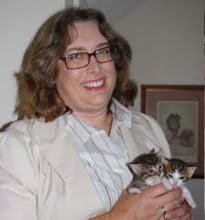
Feral Freedom Success in Jacksonville
August 05, 2010, 8:4AM MT
By Mary Hudgins, Best Friends Network volunteer
Scott Trebatoski helps collaborative efforts and lifesaving program prosper.
 “Cats are part of the landscape in Jacksonville, they are part of our community and that’s how we deal with them,” says Scott Trebatoski, division chief for Animal Care and Protective Services in Jacksonville, Florida. He believes this attitude explains the support for the Feral Freedom program in Jacksonville.
The program, begun in 2008, is a collaboration between the City of Jacksonville, First Coast No More Homeless Pets, the Jacksonville Humane Society, and Best Friends Animal Society. Feral Freedom has saved the lives of thousands of cats by using trap/neuter/return (TNR) to divert community cats from the animal control system.
Much of the credit for the outstanding success of the program belongs to Trabatoski.
 “After working with Scott, we now have an excellent relationship and find that Scott has turned Jacksonville into a great partner in our mission to end euthanasia of dogs and cats in Jacksonville,” says Rick DuCharme, founder of First Coast No More Homeless Pets. “Scott is committed to finding innovative ways to save as many lives as possible.”
Trebatoski got into animal control through the backdoor. He was working in human resources in Ft. Myers where the county animal control agency had been without a director for 18 months. He stepped in, temporarily he thought, to work out some personnel issues.
As he says, “Animal control has such a broad scope, it’s infectious when you start working in it. It’s hard to not continue. So when I was done fixing stuff, I continued working there.”
He moved on to Jacksonville when Feral Freedom was in its infancy.
“He was onboard right away with it and has been behind it 100%,” says Danita Thompson, Jacksonville cruelty investigator.
 In the Feral Freedom program, community cats who are humanely trapped by animal control are taken to First Coast for spaying and neutering. The cats bypass the animal control facility rather than becoming unfortunate statistics. First Coast then returns the cats to the area they were trapped.
“The staff’s behind the program and it has been a huge boost for morale,” Trebatoski says.
Before Feral Freedom, the shelter was terribly overcrowded, cats were kept two or three in a cage, which lead to sick cats and a high euthanasia rate. Thompson, who started with the agency working with the cats in the kennels, says, “Euthanizing dozens of cats everyday takes an emotional toll on anybody, especially somebody who is doing the job because they love animals.”
Because community cats are no longer being admitted to the shelter, overcrowding is a thing of the past, euthanasia rates for cats are down by 62 percent, owner surrenders are down by 31 percent and cat adoptions are up 40 percent.
There are no city funds involved with the program and Trebatoski estimates savings to the city “may be as much as $150,000 per year from a combination of not housing the cats for three to five days then euthanizing and disposing of them.”
 Some components of the program have changed through experience. Trebatoski credits the city for writing the ordinance to allow for experimentation and thinking outside the box.
“We’ve had to make adjustments,” notes Trebatoski. “Things we thought were going to work didn’t work and other things we tried did work.”
In the beginning all the cats were microchipped. The idea was to identify cats repeatedly being trapped. Repeated trappings didn’t occur and so microchipping was dropped for substantial financial savings to First Coast - savings that can be used for more spay/neuter surgeries.
If animal control traps an ear-tipped cat, it is now released without being taken to First Coast. Experience also led those involved to let the results of Feral Freedom speak for themselves, rather than doing an extensive public education campaign. Jacksonville’s partnership with First Coast has evolved as well. Trebatoski feels that his agency is now a full partner in the program.
Trebatoski has fielded numerous phone calls and a dozen personal visits from representatives of other communities thinking of starting a similar program.
“He is somebody other animal control agencies can look to about how to address issues,” says Shelly Kotter, Best Friends’ Focus on Felines campaign specialist.
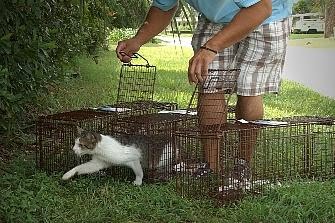 Rather than trying to copy Jacksonville’s program, Trebatoski believes every community will need to develop their own program to meet their own issues and needs. He suggests taking some ideas from Jacksonville and assembling a unique program that works for them.
One of the markers of the program’s success, Trebatoski believes, is the drop in kittens brought into the animal control system during “kitten season.”
From her days on the frontline Thompson recalls, “Prior to Feral Freedom, I would spend half my day picking up newborn litters of kittens and kittens less than two months old.” Most of those kittens were sick or too young to survive and were euthanized upon intake. Now she says, “We are seeing positive results in the numbers of kittens we are bringing in.” They are also see positive results in an increase in the number of kittens being adopted.
As Thompson says, “Feral Freedom has been a very positive change for the city, not just in terms of operation for animal control but in terms of the humanity involved.” All those who love cats heartily agree with her.
How you can help:
Your donation to the Florida Feral Freedom program will save lives.
Get more information about First Coast No More Homeless Pets.
Join the Best Friends Focus on Felines campaign and find out how you can help community cats in your area.
Photos courtesy of First Coast No More Homeless Pets and Scott Trebatoski