Friday, August 20, 2010

Wednesday, August 18, 2010
Feral Feline Freedom
FROM BEST FRIENDS ANIMAL SOCIETY:
Feral Freedom Success in Jacksonville
August 05, 2010, 8:4AM MT
By Mary Hudgins, Best Friends Network volunteer
Scott Trebatoski helps collaborative efforts and lifesaving program prosper.
 “Cats are part of the landscape in Jacksonville, they are part of our community and that’s how we deal with them,” says Scott Trebatoski, division chief for Animal Care and Protective Services in Jacksonville, Florida. He believes this attitude explains the support for the Feral Freedom program in Jacksonville.
The program, begun in 2008, is a collaboration between the City of Jacksonville, First Coast No More Homeless Pets, the Jacksonville Humane Society, and Best Friends Animal Society. Feral Freedom has saved the lives of thousands of cats by using trap/neuter/return (TNR) to divert community cats from the animal control system.
Much of the credit for the outstanding success of the program belongs to Trabatoski.
 “After working with Scott, we now have an excellent relationship and find that Scott has turned Jacksonville into a great partner in our mission to end euthanasia of dogs and cats in Jacksonville,” says Rick DuCharme, founder of First Coast No More Homeless Pets. “Scott is committed to finding innovative ways to save as many lives as possible.”
Trebatoski got into animal control through the backdoor. He was working in human resources in Ft. Myers where the county animal control agency had been without a director for 18 months. He stepped in, temporarily he thought, to work out some personnel issues.
As he says, “Animal control has such a broad scope, it’s infectious when you start working in it. It’s hard to not continue. So when I was done fixing stuff, I continued working there.”
He moved on to Jacksonville when Feral Freedom was in its infancy.
“He was onboard right away with it and has been behind it 100%,” says Danita Thompson, Jacksonville cruelty investigator.
 In the Feral Freedom program, community cats who are humanely trapped by animal control are taken to First Coast for spaying and neutering. The cats bypass the animal control facility rather than becoming unfortunate statistics. First Coast then returns the cats to the area they were trapped.
“The staff’s behind the program and it has been a huge boost for morale,” Trebatoski says.
Before Feral Freedom, the shelter was terribly overcrowded, cats were kept two or three in a cage, which lead to sick cats and a high euthanasia rate. Thompson, who started with the agency working with the cats in the kennels, says, “Euthanizing dozens of cats everyday takes an emotional toll on anybody, especially somebody who is doing the job because they love animals.”
Because community cats are no longer being admitted to the shelter, overcrowding is a thing of the past, euthanasia rates for cats are down by 62 percent, owner surrenders are down by 31 percent and cat adoptions are up 40 percent.
There are no city funds involved with the program and Trebatoski estimates savings to the city “may be as much as $150,000 per year from a combination of not housing the cats for three to five days then euthanizing and disposing of them.”
 Some components of the program have changed through experience. Trebatoski credits the city for writing the ordinance to allow for experimentation and thinking outside the box.
“We’ve had to make adjustments,” notes Trebatoski. “Things we thought were going to work didn’t work and other things we tried did work.”
In the beginning all the cats were microchipped. The idea was to identify cats repeatedly being trapped. Repeated trappings didn’t occur and so microchipping was dropped for substantial financial savings to First Coast - savings that can be used for more spay/neuter surgeries.
If animal control traps an ear-tipped cat, it is now released without being taken to First Coast. Experience also led those involved to let the results of Feral Freedom speak for themselves, rather than doing an extensive public education campaign. Jacksonville’s partnership with First Coast has evolved as well. Trebatoski feels that his agency is now a full partner in the program.
Trebatoski has fielded numerous phone calls and a dozen personal visits from representatives of other communities thinking of starting a similar program.
“He is somebody other animal control agencies can look to about how to address issues,” says Shelly Kotter, Best Friends’ Focus on Felines campaign specialist.
 Rather than trying to copy Jacksonville’s program, Trebatoski believes every community will need to develop their own program to meet their own issues and needs. He suggests taking some ideas from Jacksonville and assembling a unique program that works for them.
One of the markers of the program’s success, Trebatoski believes, is the drop in kittens brought into the animal control system during “kitten season.”
From her days on the frontline Thompson recalls, “Prior to Feral Freedom, I would spend half my day picking up newborn litters of kittens and kittens less than two months old.” Most of those kittens were sick or too young to survive and were euthanized upon intake. Now she says, “We are seeing positive results in the numbers of kittens we are bringing in.” They are also see positive results in an increase in the number of kittens being adopted.
As Thompson says, “Feral Freedom has been a very positive change for the city, not just in terms of operation for animal control but in terms of the humanity involved.” All those who love cats heartily agree with her.
How you can help:
Your donation to the Florida Feral Freedom program will save lives.
Get more information about First Coast No More Homeless Pets.
Join the Best Friends Focus on Felines campaign and find out how you can help community cats in your area.
Photos courtesy of First Coast No More Homeless Pets and Scott Trebatoski
Feral Freedom Success in Jacksonville
August 05, 2010, 8:4AM MT
By Mary Hudgins, Best Friends Network volunteer
Scott Trebatoski helps collaborative efforts and lifesaving program prosper.
 “Cats are part of the landscape in Jacksonville, they are part of our community and that’s how we deal with them,” says Scott Trebatoski, division chief for Animal Care and Protective Services in Jacksonville, Florida. He believes this attitude explains the support for the Feral Freedom program in Jacksonville.
The program, begun in 2008, is a collaboration between the City of Jacksonville, First Coast No More Homeless Pets, the Jacksonville Humane Society, and Best Friends Animal Society. Feral Freedom has saved the lives of thousands of cats by using trap/neuter/return (TNR) to divert community cats from the animal control system.
Much of the credit for the outstanding success of the program belongs to Trabatoski.
 “After working with Scott, we now have an excellent relationship and find that Scott has turned Jacksonville into a great partner in our mission to end euthanasia of dogs and cats in Jacksonville,” says Rick DuCharme, founder of First Coast No More Homeless Pets. “Scott is committed to finding innovative ways to save as many lives as possible.”
Trebatoski got into animal control through the backdoor. He was working in human resources in Ft. Myers where the county animal control agency had been without a director for 18 months. He stepped in, temporarily he thought, to work out some personnel issues.
As he says, “Animal control has such a broad scope, it’s infectious when you start working in it. It’s hard to not continue. So when I was done fixing stuff, I continued working there.”
He moved on to Jacksonville when Feral Freedom was in its infancy.
“He was onboard right away with it and has been behind it 100%,” says Danita Thompson, Jacksonville cruelty investigator.
 In the Feral Freedom program, community cats who are humanely trapped by animal control are taken to First Coast for spaying and neutering. The cats bypass the animal control facility rather than becoming unfortunate statistics. First Coast then returns the cats to the area they were trapped.
“The staff’s behind the program and it has been a huge boost for morale,” Trebatoski says.
Before Feral Freedom, the shelter was terribly overcrowded, cats were kept two or three in a cage, which lead to sick cats and a high euthanasia rate. Thompson, who started with the agency working with the cats in the kennels, says, “Euthanizing dozens of cats everyday takes an emotional toll on anybody, especially somebody who is doing the job because they love animals.”
Because community cats are no longer being admitted to the shelter, overcrowding is a thing of the past, euthanasia rates for cats are down by 62 percent, owner surrenders are down by 31 percent and cat adoptions are up 40 percent.
There are no city funds involved with the program and Trebatoski estimates savings to the city “may be as much as $150,000 per year from a combination of not housing the cats for three to five days then euthanizing and disposing of them.”
 Some components of the program have changed through experience. Trebatoski credits the city for writing the ordinance to allow for experimentation and thinking outside the box.
“We’ve had to make adjustments,” notes Trebatoski. “Things we thought were going to work didn’t work and other things we tried did work.”
In the beginning all the cats were microchipped. The idea was to identify cats repeatedly being trapped. Repeated trappings didn’t occur and so microchipping was dropped for substantial financial savings to First Coast - savings that can be used for more spay/neuter surgeries.
If animal control traps an ear-tipped cat, it is now released without being taken to First Coast. Experience also led those involved to let the results of Feral Freedom speak for themselves, rather than doing an extensive public education campaign. Jacksonville’s partnership with First Coast has evolved as well. Trebatoski feels that his agency is now a full partner in the program.
Trebatoski has fielded numerous phone calls and a dozen personal visits from representatives of other communities thinking of starting a similar program.
“He is somebody other animal control agencies can look to about how to address issues,” says Shelly Kotter, Best Friends’ Focus on Felines campaign specialist.
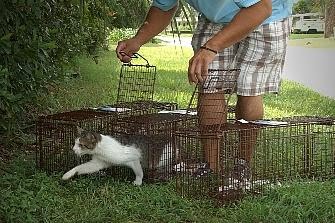 Rather than trying to copy Jacksonville’s program, Trebatoski believes every community will need to develop their own program to meet their own issues and needs. He suggests taking some ideas from Jacksonville and assembling a unique program that works for them.
One of the markers of the program’s success, Trebatoski believes, is the drop in kittens brought into the animal control system during “kitten season.”
From her days on the frontline Thompson recalls, “Prior to Feral Freedom, I would spend half my day picking up newborn litters of kittens and kittens less than two months old.” Most of those kittens were sick or too young to survive and were euthanized upon intake. Now she says, “We are seeing positive results in the numbers of kittens we are bringing in.” They are also see positive results in an increase in the number of kittens being adopted.
As Thompson says, “Feral Freedom has been a very positive change for the city, not just in terms of operation for animal control but in terms of the humanity involved.” All those who love cats heartily agree with her.
How you can help:
Your donation to the Florida Feral Freedom program will save lives.
Get more information about First Coast No More Homeless Pets.
Join the Best Friends Focus on Felines campaign and find out how you can help community cats in your area.
Photos courtesy of First Coast No More Homeless Pets and Scott Trebatoski
Monday, August 16, 2010
Deep Memories
FROM BEST FRIENDS ANIMAL SOCIETY:
July 28, 2010 : 2:43 PM ET
By Cathy Scott
A Best Friends “thank you” note, with a dog and cat pictured on the front, has prompted an elderly woman suffering from Alzheimer’s disease to smile, laugh, and reminisce about her pets for the first time in years.
Moments like that had all but disappeared -- that is, until the card with Jeffrey the dog and Dido the cat arrived. “When she received your card with this adorable puppy/kitty combo, she fell in love,” says her daughter, Judy Lee.
 Now, when 87-year-old Sarah Harrell looks at the card with the photo of a “happy, smiling puppy face and tiny kitten draped over its head, she becomes happy, animated, alert and close to being our old Mom again,” Judy says. “Because she so loves the photo, I have it in a frame, and she now keeps it on the table near where she spends much of her day.”
Sarah, who lives on the East Coast, was born and raised on a farm surrounded by animals. Some of her happiest memories -- and her late husband’s too -- were of time spent with the family’s pets. And one of her first pets, as a child, was a small duck named Dewey, and during her marriage, a dog named Wendy. Now, she shares those memories of animals like Dewey and Wendy with her daughters.
Still, it was a surprise when the photo of Dido perched atop Jeffrey’s head brought a smile to Sarah’s face. Then, to the delight of her daughters, Judy and Linda Gerecitano, Sarah began to speak.
The card, Judy says, has jogged her memory.
The family has lived with her Alzheimer’s for a long time, feeling as if their mother was slipping away. But today, Judy says, “There is something about this photograph that makes her instantly smile, laugh and often begin to talk about some of the pets she had over the years.”
Sarah’s reaction to the photo came as a pleasant surprise to another Sarah. As a Best Friends photographer, Sarah Ause, who shot the photo of Dido and Jeffrey, strives to create images that make an impact. “But helping to restore someone’s memory is really beyond anything I could have ever imagined,” she says. “I’m in awe, completely inspired and honored to know that such a small occurrence in my daily life could end up having such a significant effect on someone’s life.”
It is a photo that keeps on giving. “It is extremely difficult to accurately explain how this simple little photo seems to work a miracle time and time again,” Judy says. “It is even more difficult to express how much it means to my sister and me. This picture is doing more to ward off the ravages of this horrible disease than any pills.”
So, Aileen Walden, senior manager of Best Friends’ Donor Relations and Stewardship who first received a note about the card from Judy, had the photo enlarged, matted and sent to Sarah for her room. That too, brought a big smile to Sarah’s face. “Mom,” her daughter Judy says, “must have laughed for several minutes when she saw it.”
Photo by Sarah Ause
Wednesday, August 11, 2010
Happy photos
I received this and wanted to share.
 These pictures were taken immediately after birth. The mare laid down and the little one trotted around and crawled right up into her lap.
 Mom, Dad, Uncle Jim ~~ ~~ ~~ DON'T MOVE YET!!
 He's not my brother ~~ ~~ He's just HEAVY!!
 I promise I won't do it again, Momma!
 Just wait a couple'a years and try that again! YEAH!!
 Come on, throw the ball, throw the ball, ~~ ~~ I'm ready ~~ ~~ yeah ~~ throw it!
 Hmmmmm. I know you think you understand what you thought I said, but I'm not sure that what you heard is what I actually meant!
 We gotta get a bigger bed!
 Hey, can I have a bite'a that?
 HEY!! What's with this 'warm spot' ?
 You woke me up to tell me THAT??
 HIIIIEEEEEEYAAAAH!!!
Thursday, August 5, 2010
Feline Rescue's 2010 Book Fair
FELINE RESCUE'S 2010 BOOK FAIR
Feline Rescue’s 2010 Book Fair will be held Saturday and Sunday, August 14 and 15, from 10:00 a.m. to 3:00 p.m. at the Feline Rescue adoption center, 593 Fairview Ave N in St. Paul (just north of University Ave.).
Donate an item!
Have you been spring cleaning? Feline Rescue would love your donations! Please keep Feline Rescue in mind and donate the following items that we can sell at the Book Fair:
Gently used books
Audio books
Music CDs
DVDs
VHS
Video games
We appreciate your donations, but we can't accept textbooks, computer manuals, magazines, or encyclopedias.
We will accept donations Monday, July 12 through Monday, August 9.
Please drop off your donations at the Feline Rescue adoption center during the following hours:
Monday through Friday, 10:00 a.m. to 12:00 p.m. and 6:00 p.m. to 8:00 p.m.
Saturday and Sunday, 10:00 a.m. to 2:00 p.m.
Please note that we will be unable to accept donations after August 9 - we won't be able to process the donations in time for the event.
How to prepare your items for donation
Since you know your books best, we kindly ask that you sort and label your donations according to the following categories (you may select more than one category):
Animals
Fiction, including Romance and Mystery
Non-Fiction
Biography and Auto-Biography
History
Sports
Science Fiction
Children and Teen
Self-Help
Religion / Philosophy
Cook Books
Arts, including Art & Writing and Arts & Crafts
This year we will feature Twin Cities author Audrey McClellan and her newly-released book, O’Leary, Kat and Cary Grant ~ Adventures with a Paranormal Cat. Meet Ms. McClellan at the Book Fair and enjoy her new book! Proceeds from the sale of her book will benefit Feline Rescue.
Other authors have donated copies of their books to benefit Feline Rescue!
Twin Cities author and U of M veterinarian Justine Lee’s It’s A Cat’s World … You Just Live In It
Debra Halborn’s Greetings from the Starcat Cluster ~ It’s the Place in Space!
Proceeds from this event will go to Feline Rescue, Inc. for food, shelter, and medical care for stray, abused, and abandoned cats and kittens.
How to make a financial donation
Would you like to make a financial donation? Donations by personal check can be mailed to:
Feline Rescue, Inc.
593 Fairview Ave. N.
St. Paul, MN 55104
Attn.: Donations
If you would like to donate online using a credit card or use our PayPal account, please find the yellow PayPal Donate button on our website at www.felinerescue.org.
Monday, July 12, 2010
Good news from Animal Ark
As anyone who has followed animal welfare issues knows, summer is the busiest season for animal shelters. Available funds are generally at their lowest point of the year and demand for services reaches a high as the temperatures climb. As a result, of the business of summer, I have saved up several important and fun announcements for one post. So here it is!
 Twin Cities Pet Fix Program Expanding!
After years in operation, Minnesota's largest low-cost spay/neuter program is expanding. Historically, certificates for low-costs and, based on available funding, sometimes no-cost, spay/neuter certificates have been available at the Animal Ark Thrift Store and the Animal Ark Shelter. Within the next month, changes to the program will allow for increased certificate distribution at additional locations, including animal control centers, animal shelters and animal rescue organizations. If a nonprofit animal welfare organization or an animal control center is interested in distributing Pet Fix spay/neuter certificates, all they have to do is contact Animal Ark at (651) 772-8983 Ext. 51.
 Wildcat Wednesdays Expanding!
Three years ago, Animal Ark began piloting a program with St. Paul Animal Control to help sterilize, vaccinate and release free-roaming cats in that city. Gradually, over the following years, the program was expanded and refined. In July of 2010, the program is now officially available to anyone seeking services for a free-roaming (i.e. not owned) feline. Each Wednesday, Animal Ark's mobile surgical hospital called "The Neuter Commuter" performs free surgeries, vaccinations and other veterinary services for area feral cats. More information about the program is available by downloading this brochure.
Animal Ark's Endowment Fund Established
More than 30 years ago, Animal Ark was built by a group of compassionate animal lovers in a grass-roots effort to establish Minnesota's first no kill animal shelter. Over the following years, many wonderful achievements have been accomplished. Yet, the long-term financial stability of Animal Ark was always a distant dream. Recently, that began to change with the first sizable donation into Animal Ark's endowment fund. Animal Ark's endowment fund is a capital resource that cannot be used for general operating or program expenses. Its purpose is to provide future income through interest, and, thereby, ensure our long-term financial stability.
According to Animal Ark Founder and President, the current endowment is a great start. However, she also states that ensuring the financial stability of Animal Ark into the future will require a substantial expansion of the endowment.
Animal Ark Cat Center Officially Named
Though relatively small, Animal Ark's cat center has been getting national attention for its creative and innovative design. It features many amenities, like floor to ceiling cat trees, ceramic tile, windows and more. It provides homeless felines with unmatched comfort. Now, it is getting a new name. The Animal Ark cat center is being named in loving memory of Lisa Richcreek Neiland. Lisa is survived by a loving family. Her love of animals - especially cats - will be remembered forever. Animal Ark's cat center will from now on be called the Lisa Richcreek Neiland Cat Center at Animal Ark. An official naming celebration and remembrance day of Lisa's life will be scheduled at Animal Ark, time and date to be announced.
National Speaking Tour Continues
As the national animal welfare movement continues to focus more attention on the programs and services needed to achieve no kill community-wide, Animal Ark is being called upon more frequently to consult with organizations and municipalities outside of Minnesota to help them achieve the no kill goal. We have recently presented in Nashville, TN, and Copperas Cove, TX. We have upcoming speaking engagements scheduled for Austin, TX, Miami, FL, and Washington, DC. Though this work adds to the demands on our time during the busy season, we are proud and privileged to be asked so share our expertise with others.
Animal Ark to Host Monthly National No Kill Webinars
Beginning in the fall of 2010, Animal Ark will be hosting a monthly series of webinars designed to help shelters and animal control centers achieve no kill community wide. The webinars will feature some of the top no kill advocates in the USA, each with proven track records of success. The projected cost per webinar will be under $15 per person. Keep an eye on the Animal Ark web site for additional details to follow.
--
Mike Fry
Executive Director of Animal Ark
Co-Host of Animal Wise Radio
http://www.animalarkshelter.org
http://www.animalwiseradio.com
Animal Ark Main: (651) 772-8983
Mike Fry Direct: (651) 964-3140
Toll Free: (888) 668-0687 Ext 99
FAX: (651) 304-6038
Friday, July 9, 2010
Oscar the cat gets "bionic" feet!
Cat amputee fitted with 'bionic' feet
By Dana Rosenblatt, CNN
July 8, 2010 9:00 a.m. EDT
STORY HIGHLIGHTS
A British cat has made a full recovery after being fitted with a new pair of artificial feet
The cat, Oscar, had his hind paws accidentally severed by a combine harvester
Vet: Fitting a cat with a prosthesis below its ankle had never been performed
Doctor believes cat's surgery could improve quality of life for human amputees
 This cat, whose hind paws were accidentally severed, has been fitted with a new pair of artificial feet.
(CNN) -- If cats have nine lives, they may have just acquired a 10th -- thanks to a groundbreaking surgery that saved the life of a feline double amputee.
A British cat, Oscar, has made a full recovery after being fitted with a pair of prosthetic feet in November. The cat's hind paws were severed by a combine harvester.
The three-hour procedure, performed at an animal hospital in Surrey, England, by neuro-orthopaedic veterinary surgeon Dr. Noel Fitzpatrick, could serve as a model for human amputees.
Oscar's custom-made implants, ITAPs (Intraosseous transcutaneous amputation prosthetics), were modeled after deer antlers, which have a honeycomb structure that bones can grow through and skin can grow over.
By using computer-generated technology, a team of veterinarians and scientists designed a feline foot that mimics the way a cat walks and runs.
Oscar's implants were attached to his bones and then covered by hydroxypatite, which allows bone cells to grow onto the metal. Skin can then grow over the ITAP to form a seal against bacteria and keep infections at bay.
Custom-built paws were attached to the end of Oscar's prostheses, allowing him to run and jump like normal cats. One video of Oscar walking on his artificial feet has attracted more than 346,000 views on YouTube.
Fitting a cat with a prosthesis at the joint below the animal's ankle is a procedure that had never been performed, said Fitzpatrick, who waited seven months to announce news of Oscar's surgery because he wanted to see how the cat would recover.
The ITAPs, made from titanium aluminum, were first developed by a team of scientists at the University College of London, led by Professor Gordon Blunn.
Oscar's masters, Kate and Mike Nolan, were referred to Fitzpatrick by their local veterinarian in Jersey, England, after Oscar's accident last fall. They decided to proceed with the complicated surgery, knowing it could positively affect human medicine.
But first, Oscar's life-threatening injuries had to be treated and a course of antibiotics administered.
"We had to do a lot of soul-searching, and our main concern has always been whether this operation would be in Oscar's best interests and would give him a better quality of life," said Kate Nolan in a statement released by the animal hospital.
"Through our own background reading, we were aware that this sort of procedure is cutting-edge and also has an impact on human medicine," added Mike Nolan in a statement. "So knowledge about the way that Oscar's been treated can be carried over to human treatment going forward, so that's good for everyone."
While the surgery can benefit humans, Fitzpatrick said his decision to treat Oscar was made first and foremost to save the cat's life.
"He is the most remarkable cat. You can see that he desperately wanted to live," he said.
While many animals can live with only three limbs, it would have been impossible for Oscar to survive with only two limbs, Fitzpatrick said.
Although Oscar's life was insured for 4,000 British pounds (approximately $6,070), Fitzpatrick dedicated much of his time and hospital resources at no cost to treat Oscar.
Fitzpatrick believes the cat's prosthetic surgery could lead to similar advancements for human amputees needing artificial limbs.
"As long as it's in the interest of my patient, if everything works well, we can apply this to human victims," he said.
Oscar has adjusted well to his new legs, Fitzpatrick said, although he'll remain an indoor cat.
He may not chase mice like he used to, but he can still scratch up the furniture.
Subscribe to:
Posts (Atom)