Thursday, September 30, 2010

Thursday, September 23, 2010
Cat Crisis
There's a 'cat crisis' at Twin Cities animal shelters
By Bob Shaw
Pioneer Press
Updated: 09/22/2010
Where's the love? That's what Minnesota's cats should be asking themselves, at the grim evidence that Minnesotans seem to be loving their cats less — and their dogs more.
In shelters, abandoned cats should be looking jealously at their canine colleagues — because cat adoptions are falling in Minnesota, even as dog adoptions increase.
"We have a cat crisis," said Deb Balzer, spokeswoman for the Animal Humane Society, whose five Twin Cities facilities are being engulfed by a river of 70 unwanted cats per day.
At the cat rescue group SCRAM, adoptions have plummeted by half in one year.
"Oh, the calls ... the calls ...," sighed SCRAM founder Laura Johnson, who talks with an endless stream of fed-up cat owners.
"People want to move, and the cats can't come with them. They ask for help with cat food or kitty litter," she said. "There are no jobs. Unemployment has run out. They can't get medical insurance."
The widening love-gap between dogs and cats is a national trend, said Nancy Peterson, the Cat Programs manager for the Humane Society of the U.S.
Nationally, there are more cats in shelters, while the number of dogs in shelters is remaining steady. Many shelters are being forced to convert dog kennels into cat cages, Peterson said.
Dog owners, like dogs, are more loyal. About 30 percent of dogs in shelters are reclaimed by owners, compared with about 4 percent for cats, according to the national Humane Society.
Pet owners lavish money on dogs (an average of $225 annually) more than cats ($203).
And now, dogs are finding more homes. In fact, Minnesotans are so eager to adopt dogs that the Animal Humane Society imported nearly 1,000 dogs from Oklahoma and Georgia last year.
"People want dogs. That is why we are able to help other rescue groups with dogs," Balzer said.
Why is there such a difference in human feelings for dogs vs. cats?
One reason is simple math. There are far more cats than dogs. Cats — nature's perfect breeding machines — can get pregnant at the age of 4 months and can have up to three litters a year.
About 42,000 kittens are born every day in the U.S., compared with 10,000 people, according to the group Spay USA. The feral cat population is about 80 million — with an estimated 480,000 in the Twin Cities.
Cats dominate shelters, accounting for 58 percent of the animals taken in by the Animal Humane Society in 2009.
That imbalance increases the urgency, Balzer said, of finding more loving homes for cats. Dogs don't have that problem.
"A puppy's face, people come running for. But cats have a different role in society," Balzer said. "This is a community problem."
With adoptions down, the Humane Society will have about 3,000 more unwanted cats to deal with this year.
Officials are trying to find them homes. The group announced this month that it has slashed adoption fees to $50 for a neutered, vaccinated, microchip-implanted cat.
And it is extending a two-for-one sale. The "Double the Love" program allows families to adopt two adult cats for the price of one — $50.
The Humane Society neuters thousands of cats each year and advocates for all owners to neuter cats. Because of such programs, it slashed euthanizations in 2009 by 9 percent to 11,000 animals — most of them cats.
But this year, it will be difficult to keep euthanizations down. Balzer wouldn't estimate how many more cats would be killed in 2010, but she did say, "Euthanasia is a reality."
"Does it break our hearts? Absolutely," she said. "Are we looking for any opportunities to help? Absolutely."
It's too soon to tell if the new programs will be enough to deal with the stampede of incoming cats.
Last July's cat adoptions at the Humane Society were down 15 percent. Adoptions in the two-for-one "Double the Love" program have dropped by 36 percent in one year.
For SCRAM founder Johnson, the stress of dealing with so many unwanted cats is grinding.
She was recently called to help one female cat in Blaine, abandoned when her owners moved. Johnson said the cat has been sitting by the back door for weeks.
"She cries and cries. The neighbor feeds her. And now she has had two kittens," said Johnson — the start of another feral colony.
"It makes me crazy," she said.
Bob Shaw can be reached at 651-228-5433.
By Bob Shaw
Pioneer Press
Updated: 09/22/2010
Where's the love? That's what Minnesota's cats should be asking themselves, at the grim evidence that Minnesotans seem to be loving their cats less — and their dogs more.
In shelters, abandoned cats should be looking jealously at their canine colleagues — because cat adoptions are falling in Minnesota, even as dog adoptions increase.
"We have a cat crisis," said Deb Balzer, spokeswoman for the Animal Humane Society, whose five Twin Cities facilities are being engulfed by a river of 70 unwanted cats per day.
At the cat rescue group SCRAM, adoptions have plummeted by half in one year.
"Oh, the calls ... the calls ...," sighed SCRAM founder Laura Johnson, who talks with an endless stream of fed-up cat owners.
"People want to move, and the cats can't come with them. They ask for help with cat food or kitty litter," she said. "There are no jobs. Unemployment has run out. They can't get medical insurance."
The widening love-gap between dogs and cats is a national trend, said Nancy Peterson, the Cat Programs manager for the Humane Society of the U.S.
Nationally, there are more cats in shelters, while the number of dogs in shelters is remaining steady. Many shelters are being forced to convert dog kennels into cat cages, Peterson said.
Dog owners, like dogs, are more loyal. About 30 percent of dogs in shelters are reclaimed by owners, compared with about 4 percent for cats, according to the national Humane Society.
Pet owners lavish money on dogs (an average of $225 annually) more than cats ($203).
And now, dogs are finding more homes. In fact, Minnesotans are so eager to adopt dogs that the Animal Humane Society imported nearly 1,000 dogs from Oklahoma and Georgia last year.
"People want dogs. That is why we are able to help other rescue groups with dogs," Balzer said.
Why is there such a difference in human feelings for dogs vs. cats?
One reason is simple math. There are far more cats than dogs. Cats — nature's perfect breeding machines — can get pregnant at the age of 4 months and can have up to three litters a year.
About 42,000 kittens are born every day in the U.S., compared with 10,000 people, according to the group Spay USA. The feral cat population is about 80 million — with an estimated 480,000 in the Twin Cities.
Cats dominate shelters, accounting for 58 percent of the animals taken in by the Animal Humane Society in 2009.
That imbalance increases the urgency, Balzer said, of finding more loving homes for cats. Dogs don't have that problem.
"A puppy's face, people come running for. But cats have a different role in society," Balzer said. "This is a community problem."
With adoptions down, the Humane Society will have about 3,000 more unwanted cats to deal with this year.
Officials are trying to find them homes. The group announced this month that it has slashed adoption fees to $50 for a neutered, vaccinated, microchip-implanted cat.
And it is extending a two-for-one sale. The "Double the Love" program allows families to adopt two adult cats for the price of one — $50.
The Humane Society neuters thousands of cats each year and advocates for all owners to neuter cats. Because of such programs, it slashed euthanizations in 2009 by 9 percent to 11,000 animals — most of them cats.
But this year, it will be difficult to keep euthanizations down. Balzer wouldn't estimate how many more cats would be killed in 2010, but she did say, "Euthanasia is a reality."
"Does it break our hearts? Absolutely," she said. "Are we looking for any opportunities to help? Absolutely."
It's too soon to tell if the new programs will be enough to deal with the stampede of incoming cats.
Last July's cat adoptions at the Humane Society were down 15 percent. Adoptions in the two-for-one "Double the Love" program have dropped by 36 percent in one year.
For SCRAM founder Johnson, the stress of dealing with so many unwanted cats is grinding.
She was recently called to help one female cat in Blaine, abandoned when her owners moved. Johnson said the cat has been sitting by the back door for weeks.
"She cries and cries. The neighbor feeds her. And now she has had two kittens," said Johnson — the start of another feral colony.
"It makes me crazy," she said.
Bob Shaw can be reached at 651-228-5433.
Wednesday, September 1, 2010
Panda Therapy
It's no wonder the world has fallen in love with these animals.
 Mum? Can you come and get me down now?
 I'm not coming out. You'll have to come in and get me.
 Kung Fu Panda...bring it on!
 On the count of three.... lift!
 Does this log make my butt look fat?
 Oops! Slight miscalculation.
 You go. I'll just stay here and rest my head a little bit.
 I'll give you 2 seconds to get off me or I'm calling Mom.
 Pardon me but do you have a napkin?
 Dear Martha Stewart:
I have this brown stain on my nice, white, fluffy bottom ...
 Shhhh! I'm reviewing....
 I cannot believe that I'm stuck in this tree again.
What is the matter with me?
 Forgive me Father, for I have sinned...
 Absolutely nothing accomplished.
The perfect day for a panda...
DON'T YOU FEEL BETTER ALREADY?!
 Mum? Can you come and get me down now?
 I'm not coming out. You'll have to come in and get me.
 Kung Fu Panda...bring it on!
 On the count of three.... lift!
 Does this log make my butt look fat?
 Oops! Slight miscalculation.
 You go. I'll just stay here and rest my head a little bit.
 I'll give you 2 seconds to get off me or I'm calling Mom.
 Pardon me but do you have a napkin?
 Dear Martha Stewart:
 I have this brown stain on my nice, white, fluffy bottom ...
 Shhhh! I'm reviewing....
 I cannot believe that I'm stuck in this tree again.
 What is the matter with me?
 Forgive me Father, for I have sinned...
 Absolutely nothing accomplished.
 The perfect day for a panda...
DON'T YOU FEEL BETTER ALREADY?!
Tuesday, August 24, 2010
No Kill Webinar: Reforming Animal Control
No Kill Webinar: Reforming Your Animal Control
Join us for a Webinar on October 22
Only $25
 Nathan Winograd from the No Kill Advocacy Center and Mike Fry from Animal Ark and Animal Wise Radio will host this webinar, featuring a dynamic presentation by Ryan Clinton from Fix Austin. Clinton will share tips for moving your local animal control to the no kill model, whether or not they are on board with your effort.
Lear how Fix Austin transformed their city from a high-kill methodology to one that embraced the No Kill Equation, and learn what you can do in your community to achieve similar results.
Title: No Kill Webinar: Reforming Your Animal Control
Date: Friday, October 22, 2010
Time: 2:00 PM - 3:00 AM CDT
After registering you will receive a confirmation email containing information about joining the Webinar.
System Requirements
PC-based attendees
Required: Windows® 7, Vista, XP or 2003 Server
Macintosh®-based attendees
Required: Mac OS® X 10.4.11 (Tiger®) or newer
Space is limited.
Reserve your Webinar seat now at:
https://www1.gotomeeting.com/register/268138184
Join us for a Webinar on October 22
Only $25
 Nathan Winograd from the No Kill Advocacy Center and Mike Fry from Animal Ark and Animal Wise Radio will host this webinar, featuring a dynamic presentation by Ryan Clinton from Fix Austin. Clinton will share tips for moving your local animal control to the no kill model, whether or not they are on board with your effort.
 Lear how Fix Austin transformed their city from a high-kill methodology to one that embraced the No Kill Equation, and learn what you can do in your community to achieve similar results.
Title: No Kill Webinar: Reforming Your Animal Control
Date: Friday, October 22, 2010
Time: 2:00 PM - 3:00 AM CDT
After registering you will receive a confirmation email containing information about joining the Webinar.
System Requirements
PC-based attendees
Required: Windows® 7, Vista, XP or 2003 Server
Macintosh®-based attendees
Required: Mac OS® X 10.4.11 (Tiger®) or newer
Space is limited.
Reserve your Webinar seat now at:
https://www1.gotomeeting.com/register/268138184
Monday, August 23, 2010
SC: Dogs trained to attack chained, declawed, defanged bears
Activists' video shows SC hounds repeatedly running at chained, declawed bear
By MEG KINNARD , Associated Press
COLUMBIA, S.C. - A declawed, defanged bear is chained to a stake as hunting dogs bark and snap, trying to force the bear to stand on its hind legs. The training exercise called bear baying is intended to make the bears easier to shoot in the wild and it's only allowed in South Carolina.
Armed with new undercover video of four such events, the Humane Society of the United States is pressuring state officials to explicitly outlaw the practice, which the organization says is effectively banned in every other state. Animal rights advocates say it's cruel to the nearly defenseless bears and harms them psychologically.
Hunters say the exercise popular in the state's hilly northwestern corner helps them train their dogs on what to do when they come across a bear during a hunt.
But John Goodwin, the Humane Society's chief animal fighting expert, calls it "bear baiting" — a centuries-old bloodsport that is more for spectators' entertainment than instruction for dogs on what to do when they encounter wild bears.
"This isn't about training dogs. This is a competition," Goodwin said a news conference in Columbia on Monday in conjunction with the public release of the videos. "If this is their idea of training a dog for hunting, then they're sending that dog on a suicide mission."
State law on the issue is murky. Statutes banning animal fighting have a specific exemption for dog training. And while South Carolina Attorney General Henry McMaster says animal cruelty laws prohibit bear baying, he hasn't prosecuted any cases.
On Monday, a spokesman for McMaster's office said prosecutors were reviewing the videos.
The videos, which were filmed with hidden cameras by activists posing as spectators, show an adult black bear standing on all fours, its back to a 4-foot high wooden fence, tethered to the ground by several feet of chain. Crowds of a few dozen line the dirt pen around it.
The bear rises onto its hind legs as three hounds sprint toward it, which is precisely the point: Hunters have a better chance of killing a bear swiftly with a shot to its exposed underbelly.
The unleashed dogs bark, show their teeth and swat at the bear, which lunges to the end of the chain, then backs up against the fence.
Moments later, handlers pull off the dogs. A new team of dogs — most of them Plott hounds weighing about 50 pounds — soon takes on the roughly 150-pound bear. Dozens more will follow.
"We really view this as a throwback to the days of the Roman Colosseum, when people filled an arena as spectators to watch animals pitted against each other," said Michael Markarian, the Humane Society's chief operating officer.
Animals regularly died bloody deaths during the ancient battles Markarian references. But the Humane Society's videos show no bloodshed. Handlers need their dogs healthy for hunting, and the bear is needed for more exercise sessions.
Along with staging activities such as dog races and field trials, hunting groups hold competitions in South Carolina to see whose dog team can most quickly get the bear to rise up on its hind legs, or "bay."
"It's just training," says Brian Kelly, a hunting enthusiast who organized a bear baying in Greenville County in February. "There's no dogs that get in any conflict with the bear, and the dog does not get hurt."
Kelly said the bear is kept in a cage while dogs on 3-foot leashes bark at it, with judges rating the dogs on how well they pay attention to and become accustomed to being close to the much bigger animal.
That description isn't backed up by the Humane Society's videos, which clearly show the dogs and bear swatting each other. The dogs aren't on leashes, and one of them was injured after the bear slapped it, Markarian said.
The only time the bear is shown in a cage on-screen is in the bed of a pickup truck, either before or after the baying.
Markarian said bear baying is illegal in all states but South Carolina, though a review of some of those laws shows the ban is by default. North Carolina, for instance, has a law against keeping black bears in captivity except for zoos or for scientific research, but have no explicit ban on baying.
South Carolina's ban on animal fighting has an exemption that allows bear baying, as long as there is no "repeated contact" between the animals. When the attorney general was asked to weigh in on the issue in 2008, McMaster issued an opinion saying he views the practice as illegal under the state's animal cruelty law.
Bear hunting is permitted for two weeks each October in only three counties in northwestern South Carolina. Last year, hunters bagged 92 bears — the most ever recorded in a season.
For a limited time in 2005, the state Department of Natural Resources issued 38 permits to keep bears for baying, all for bears that were already in captivity as pets or in small zoos. Fourteen of those bears have either died or been let go, leaving 24 permitted captive bears, according to regional wildlife coordinator Tom Swayngham.
At least eight of those animals are used for baying in the three counties where bear hunting is permitted, Markarian said. But the same bear showed up in all the events taped by the group's investigators, he said.
The man identified by the Humane Society as the owner of that bear did not return repeated messages left by the AP. State records show he has permits for five black bears.
Animal fighting has history in South Carolina, where the mascot of the state's flagship university is a "Fighting Gamecock" with metal spurs. The state's agriculture commissioner pleaded guilty in 2005 to extortion after admitting he took a bribe to protect a cockfighting ring.
That led to a heated legislative debate about cockfighting, deadly contests between two roosters that have been illegal since 1917 but remain fairly commonplace. In 2006, Gov. Mark Sanford signed legislation raising penalties for cockfighting and outlawing hog-dog rodeos — events where dogs maul and maim hogs to subdue them — and other animal blood sports.
State Rep. David Hiott of Pickens County, one of the counties that allow bear hunting, said it's unlikely the Legislature will revisit a ban on bear baying.
If the Humane Society strikes out with lawmakers, it will ask wildlife managers to effectively halt bear baying by revoking the remaining captive bear permits, Markarian said.
"They can put a stop to this cruelty immediately," he said.
___
Online:
Humane Society of the United States: http://www.humanesociety.org/
National Plott Hound Association: http://www.nationalplotthoundassociation.org/
By MEG KINNARD , Associated Press
COLUMBIA, S.C. - A declawed, defanged bear is chained to a stake as hunting dogs bark and snap, trying to force the bear to stand on its hind legs. The training exercise called bear baying is intended to make the bears easier to shoot in the wild and it's only allowed in South Carolina.
Armed with new undercover video of four such events, the Humane Society of the United States is pressuring state officials to explicitly outlaw the practice, which the organization says is effectively banned in every other state. Animal rights advocates say it's cruel to the nearly defenseless bears and harms them psychologically.
Hunters say the exercise popular in the state's hilly northwestern corner helps them train their dogs on what to do when they come across a bear during a hunt.
But John Goodwin, the Humane Society's chief animal fighting expert, calls it "bear baiting" — a centuries-old bloodsport that is more for spectators' entertainment than instruction for dogs on what to do when they encounter wild bears.
"This isn't about training dogs. This is a competition," Goodwin said a news conference in Columbia on Monday in conjunction with the public release of the videos. "If this is their idea of training a dog for hunting, then they're sending that dog on a suicide mission."
State law on the issue is murky. Statutes banning animal fighting have a specific exemption for dog training. And while South Carolina Attorney General Henry McMaster says animal cruelty laws prohibit bear baying, he hasn't prosecuted any cases.
On Monday, a spokesman for McMaster's office said prosecutors were reviewing the videos.
The videos, which were filmed with hidden cameras by activists posing as spectators, show an adult black bear standing on all fours, its back to a 4-foot high wooden fence, tethered to the ground by several feet of chain. Crowds of a few dozen line the dirt pen around it.
The bear rises onto its hind legs as three hounds sprint toward it, which is precisely the point: Hunters have a better chance of killing a bear swiftly with a shot to its exposed underbelly.
The unleashed dogs bark, show their teeth and swat at the bear, which lunges to the end of the chain, then backs up against the fence.
Moments later, handlers pull off the dogs. A new team of dogs — most of them Plott hounds weighing about 50 pounds — soon takes on the roughly 150-pound bear. Dozens more will follow.
"We really view this as a throwback to the days of the Roman Colosseum, when people filled an arena as spectators to watch animals pitted against each other," said Michael Markarian, the Humane Society's chief operating officer.
Animals regularly died bloody deaths during the ancient battles Markarian references. But the Humane Society's videos show no bloodshed. Handlers need their dogs healthy for hunting, and the bear is needed for more exercise sessions.
Along with staging activities such as dog races and field trials, hunting groups hold competitions in South Carolina to see whose dog team can most quickly get the bear to rise up on its hind legs, or "bay."
"It's just training," says Brian Kelly, a hunting enthusiast who organized a bear baying in Greenville County in February. "There's no dogs that get in any conflict with the bear, and the dog does not get hurt."
Kelly said the bear is kept in a cage while dogs on 3-foot leashes bark at it, with judges rating the dogs on how well they pay attention to and become accustomed to being close to the much bigger animal.
That description isn't backed up by the Humane Society's videos, which clearly show the dogs and bear swatting each other. The dogs aren't on leashes, and one of them was injured after the bear slapped it, Markarian said.
The only time the bear is shown in a cage on-screen is in the bed of a pickup truck, either before or after the baying.
Markarian said bear baying is illegal in all states but South Carolina, though a review of some of those laws shows the ban is by default. North Carolina, for instance, has a law against keeping black bears in captivity except for zoos or for scientific research, but have no explicit ban on baying.
South Carolina's ban on animal fighting has an exemption that allows bear baying, as long as there is no "repeated contact" between the animals. When the attorney general was asked to weigh in on the issue in 2008, McMaster issued an opinion saying he views the practice as illegal under the state's animal cruelty law.
Bear hunting is permitted for two weeks each October in only three counties in northwestern South Carolina. Last year, hunters bagged 92 bears — the most ever recorded in a season.
For a limited time in 2005, the state Department of Natural Resources issued 38 permits to keep bears for baying, all for bears that were already in captivity as pets or in small zoos. Fourteen of those bears have either died or been let go, leaving 24 permitted captive bears, according to regional wildlife coordinator Tom Swayngham.
At least eight of those animals are used for baying in the three counties where bear hunting is permitted, Markarian said. But the same bear showed up in all the events taped by the group's investigators, he said.
The man identified by the Humane Society as the owner of that bear did not return repeated messages left by the AP. State records show he has permits for five black bears.
Animal fighting has history in South Carolina, where the mascot of the state's flagship university is a "Fighting Gamecock" with metal spurs. The state's agriculture commissioner pleaded guilty in 2005 to extortion after admitting he took a bribe to protect a cockfighting ring.
That led to a heated legislative debate about cockfighting, deadly contests between two roosters that have been illegal since 1917 but remain fairly commonplace. In 2006, Gov. Mark Sanford signed legislation raising penalties for cockfighting and outlawing hog-dog rodeos — events where dogs maul and maim hogs to subdue them — and other animal blood sports.
State Rep. David Hiott of Pickens County, one of the counties that allow bear hunting, said it's unlikely the Legislature will revisit a ban on bear baying.
If the Humane Society strikes out with lawmakers, it will ask wildlife managers to effectively halt bear baying by revoking the remaining captive bear permits, Markarian said.
"They can put a stop to this cruelty immediately," he said.
___
Online:
Humane Society of the United States: http://www.humanesociety.org/
National Plott Hound Association: http://www.nationalplotthoundassociation.org/
Friday, August 20, 2010
Wednesday, August 18, 2010
Feral Feline Freedom
FROM BEST FRIENDS ANIMAL SOCIETY:
Feral Freedom Success in Jacksonville
August 05, 2010, 8:4AM MT
By Mary Hudgins, Best Friends Network volunteer
Scott Trebatoski helps collaborative efforts and lifesaving program prosper.
 “Cats are part of the landscape in Jacksonville, they are part of our community and that’s how we deal with them,” says Scott Trebatoski, division chief for Animal Care and Protective Services in Jacksonville, Florida. He believes this attitude explains the support for the Feral Freedom program in Jacksonville.
The program, begun in 2008, is a collaboration between the City of Jacksonville, First Coast No More Homeless Pets, the Jacksonville Humane Society, and Best Friends Animal Society. Feral Freedom has saved the lives of thousands of cats by using trap/neuter/return (TNR) to divert community cats from the animal control system.
Much of the credit for the outstanding success of the program belongs to Trabatoski.
 “After working with Scott, we now have an excellent relationship and find that Scott has turned Jacksonville into a great partner in our mission to end euthanasia of dogs and cats in Jacksonville,” says Rick DuCharme, founder of First Coast No More Homeless Pets. “Scott is committed to finding innovative ways to save as many lives as possible.”
Trebatoski got into animal control through the backdoor. He was working in human resources in Ft. Myers where the county animal control agency had been without a director for 18 months. He stepped in, temporarily he thought, to work out some personnel issues.
As he says, “Animal control has such a broad scope, it’s infectious when you start working in it. It’s hard to not continue. So when I was done fixing stuff, I continued working there.”
He moved on to Jacksonville when Feral Freedom was in its infancy.
“He was onboard right away with it and has been behind it 100%,” says Danita Thompson, Jacksonville cruelty investigator.
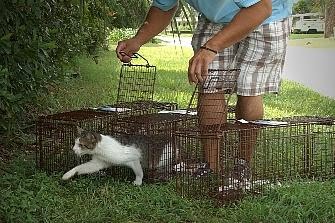
 In the Feral Freedom program, community cats who are humanely trapped by animal control are taken to First Coast for spaying and neutering. The cats bypass the animal control facility rather than becoming unfortunate statistics. First Coast then returns the cats to the area they were trapped.
“The staff’s behind the program and it has been a huge boost for morale,” Trebatoski says.
Before Feral Freedom, the shelter was terribly overcrowded, cats were kept two or three in a cage, which lead to sick cats and a high euthanasia rate. Thompson, who started with the agency working with the cats in the kennels, says, “Euthanizing dozens of cats everyday takes an emotional toll on anybody, especially somebody who is doing the job because they love animals.”
Because community cats are no longer being admitted to the shelter, overcrowding is a thing of the past, euthanasia rates for cats are down by 62 percent, owner surrenders are down by 31 percent and cat adoptions are up 40 percent.
There are no city funds involved with the program and Trebatoski estimates savings to the city “may be as much as $150,000 per year from a combination of not housing the cats for three to five days then euthanizing and disposing of them.”
 Some components of the program have changed through experience. Trebatoski credits the city for writing the ordinance to allow for experimentation and thinking outside the box.
“We’ve had to make adjustments,” notes Trebatoski. “Things we thought were going to work didn’t work and other things we tried did work.”
In the beginning all the cats were microchipped. The idea was to identify cats repeatedly being trapped. Repeated trappings didn’t occur and so microchipping was dropped for substantial financial savings to First Coast - savings that can be used for more spay/neuter surgeries.
If animal control traps an ear-tipped cat, it is now released without being taken to First Coast. Experience also led those involved to let the results of Feral Freedom speak for themselves, rather than doing an extensive public education campaign. Jacksonville’s partnership with First Coast has evolved as well. Trebatoski feels that his agency is now a full partner in the program.
Trebatoski has fielded numerous phone calls and a dozen personal visits from representatives of other communities thinking of starting a similar program.
“He is somebody other animal control agencies can look to about how to address issues,” says Shelly Kotter, Best Friends’ Focus on Felines campaign specialist.
 Rather than trying to copy Jacksonville’s program, Trebatoski believes every community will need to develop their own program to meet their own issues and needs. He suggests taking some ideas from Jacksonville and assembling a unique program that works for them.
One of the markers of the program’s success, Trebatoski believes, is the drop in kittens brought into the animal control system during “kitten season.”
From her days on the frontline Thompson recalls, “Prior to Feral Freedom, I would spend half my day picking up newborn litters of kittens and kittens less than two months old.” Most of those kittens were sick or too young to survive and were euthanized upon intake. Now she says, “We are seeing positive results in the numbers of kittens we are bringing in.” They are also see positive results in an increase in the number of kittens being adopted.
As Thompson says, “Feral Freedom has been a very positive change for the city, not just in terms of operation for animal control but in terms of the humanity involved.” All those who love cats heartily agree with her.
How you can help:
Your donation to the Florida Feral Freedom program will save lives.
Get more information about First Coast No More Homeless Pets.
Join the Best Friends Focus on Felines campaign and find out how you can help community cats in your area.
Photos courtesy of First Coast No More Homeless Pets and Scott Trebatoski
Feral Freedom Success in Jacksonville
August 05, 2010, 8:4AM MT
By Mary Hudgins, Best Friends Network volunteer
Scott Trebatoski helps collaborative efforts and lifesaving program prosper.
 “Cats are part of the landscape in Jacksonville, they are part of our community and that’s how we deal with them,” says Scott Trebatoski, division chief for Animal Care and Protective Services in Jacksonville, Florida. He believes this attitude explains the support for the Feral Freedom program in Jacksonville.
The program, begun in 2008, is a collaboration between the City of Jacksonville, First Coast No More Homeless Pets, the Jacksonville Humane Society, and Best Friends Animal Society. Feral Freedom has saved the lives of thousands of cats by using trap/neuter/return (TNR) to divert community cats from the animal control system.
Much of the credit for the outstanding success of the program belongs to Trabatoski.
 “After working with Scott, we now have an excellent relationship and find that Scott has turned Jacksonville into a great partner in our mission to end euthanasia of dogs and cats in Jacksonville,” says Rick DuCharme, founder of First Coast No More Homeless Pets. “Scott is committed to finding innovative ways to save as many lives as possible.”
Trebatoski got into animal control through the backdoor. He was working in human resources in Ft. Myers where the county animal control agency had been without a director for 18 months. He stepped in, temporarily he thought, to work out some personnel issues.
As he says, “Animal control has such a broad scope, it’s infectious when you start working in it. It’s hard to not continue. So when I was done fixing stuff, I continued working there.”
He moved on to Jacksonville when Feral Freedom was in its infancy.
“He was onboard right away with it and has been behind it 100%,” says Danita Thompson, Jacksonville cruelty investigator.
 In the Feral Freedom program, community cats who are humanely trapped by animal control are taken to First Coast for spaying and neutering. The cats bypass the animal control facility rather than becoming unfortunate statistics. First Coast then returns the cats to the area they were trapped.
“The staff’s behind the program and it has been a huge boost for morale,” Trebatoski says.
Before Feral Freedom, the shelter was terribly overcrowded, cats were kept two or three in a cage, which lead to sick cats and a high euthanasia rate. Thompson, who started with the agency working with the cats in the kennels, says, “Euthanizing dozens of cats everyday takes an emotional toll on anybody, especially somebody who is doing the job because they love animals.”
Because community cats are no longer being admitted to the shelter, overcrowding is a thing of the past, euthanasia rates for cats are down by 62 percent, owner surrenders are down by 31 percent and cat adoptions are up 40 percent.
There are no city funds involved with the program and Trebatoski estimates savings to the city “may be as much as $150,000 per year from a combination of not housing the cats for three to five days then euthanizing and disposing of them.”
 Some components of the program have changed through experience. Trebatoski credits the city for writing the ordinance to allow for experimentation and thinking outside the box.
“We’ve had to make adjustments,” notes Trebatoski. “Things we thought were going to work didn’t work and other things we tried did work.”
In the beginning all the cats were microchipped. The idea was to identify cats repeatedly being trapped. Repeated trappings didn’t occur and so microchipping was dropped for substantial financial savings to First Coast - savings that can be used for more spay/neuter surgeries.
If animal control traps an ear-tipped cat, it is now released without being taken to First Coast. Experience also led those involved to let the results of Feral Freedom speak for themselves, rather than doing an extensive public education campaign. Jacksonville’s partnership with First Coast has evolved as well. Trebatoski feels that his agency is now a full partner in the program.
Trebatoski has fielded numerous phone calls and a dozen personal visits from representatives of other communities thinking of starting a similar program.
“He is somebody other animal control agencies can look to about how to address issues,” says Shelly Kotter, Best Friends’ Focus on Felines campaign specialist.
 Rather than trying to copy Jacksonville’s program, Trebatoski believes every community will need to develop their own program to meet their own issues and needs. He suggests taking some ideas from Jacksonville and assembling a unique program that works for them.
One of the markers of the program’s success, Trebatoski believes, is the drop in kittens brought into the animal control system during “kitten season.”
From her days on the frontline Thompson recalls, “Prior to Feral Freedom, I would spend half my day picking up newborn litters of kittens and kittens less than two months old.” Most of those kittens were sick or too young to survive and were euthanized upon intake. Now she says, “We are seeing positive results in the numbers of kittens we are bringing in.” They are also see positive results in an increase in the number of kittens being adopted.
As Thompson says, “Feral Freedom has been a very positive change for the city, not just in terms of operation for animal control but in terms of the humanity involved.” All those who love cats heartily agree with her.
How you can help:
Your donation to the Florida Feral Freedom program will save lives.
Get more information about First Coast No More Homeless Pets.
Join the Best Friends Focus on Felines campaign and find out how you can help community cats in your area.
Photos courtesy of First Coast No More Homeless Pets and Scott Trebatoski
Subscribe to:
Posts (Atom)